Author: Mariangela Venezia, Supervisor Digital Editorial at Sanoma Learning
The Sanoma project A Spasso nella Storia (“A Stroll Through History”) is designed as part of the digital kit for the three new lower secondary school history courses. It includes 12 videos over three years, recounting key moments at crucial turning points in history. The aim is to guide students on an engaging journey through different historical eras, while also responding to the new ministerial guidelines that call for an immersive and narrative approach to the study of history.
The project has been built thanks to the contribution of different experts and new technologies:
- A professional actor
- A team of directors and cameramen specialized in high-level audiovisual productions, equipped with state-of-the-art technology
- The use of AI
- A video communication expert responsible for scriptwriting
- A Sanoma historian for content review
The story begins in the bedroom of a history enthusiast, an environment entirely recreated using AI, representing a virtuous use of artificial intelligence in the service of education and creativity.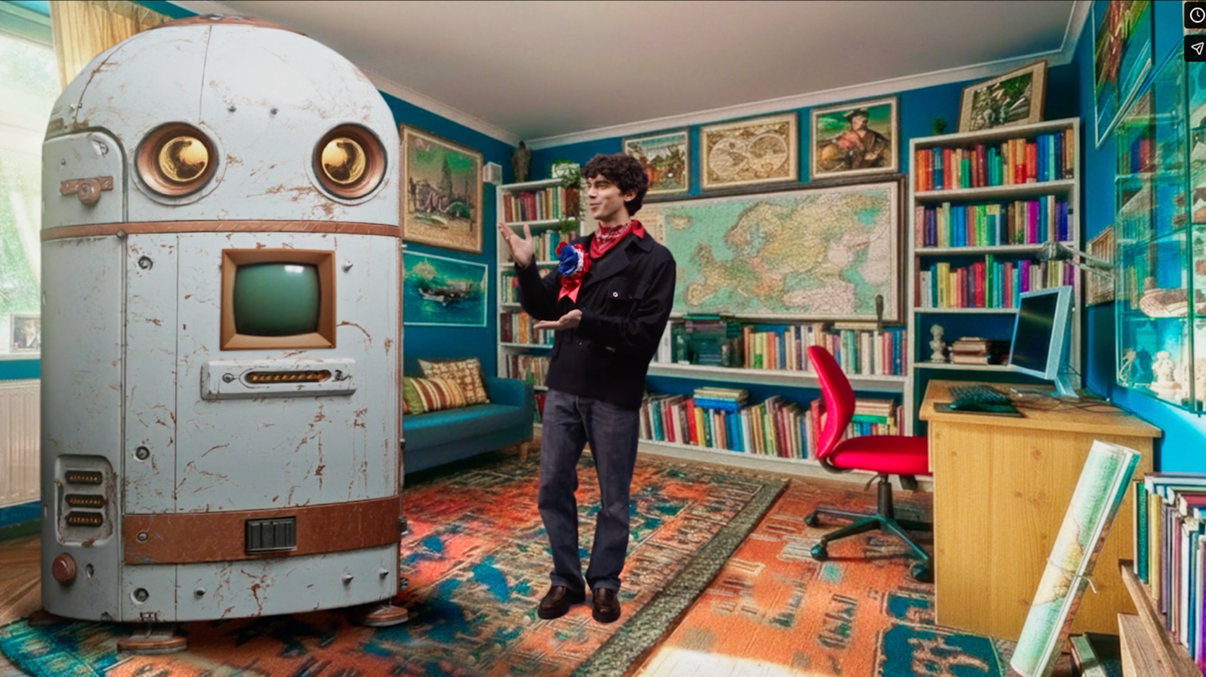
The room - with its desk, books, decorated walls, and everyday objects - is not merely a backdrop, but a living narrative space, carefully crafted in detail to feel authentic and relatable to students’ everyday experiences. This immersive setting becomes the starting point for a journey through time, transforming a familiar space into a gateway to the past. The threshold is crossed thanks to Crono, an eccentric time machine that transports the boy into different historical eras.
The most surprising element is the animation of paintings. Eighteenth- and nineteenth-century artworks come to life through a sophisticated use of artificial intelligence. AI is not used to replace the creative dimension, but to enhance it: the images remain faithful to their painterly nature, while gaining depth, expressiveness, and dynamism.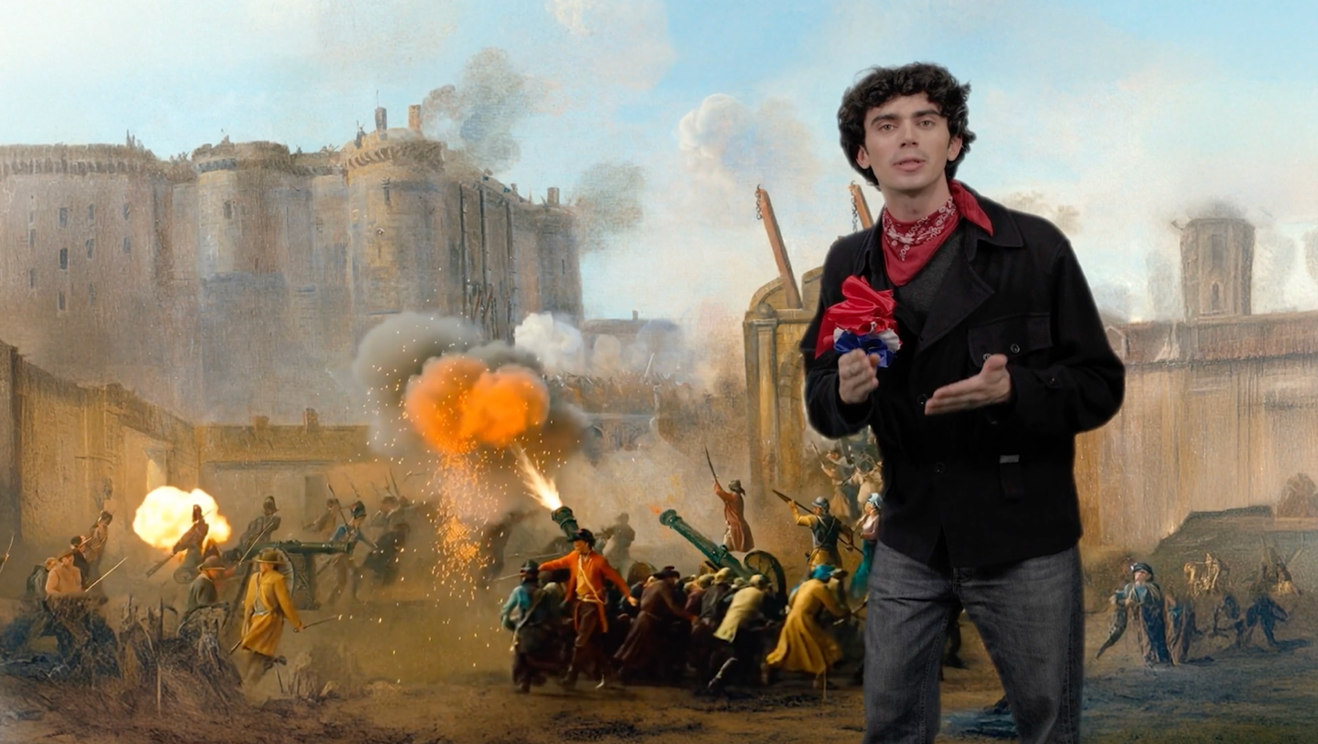
Some of the protagonists of the narrated events engage in dialogue with the young student, creating a bridge between past and present. The characters step out of the stillness of the canvas, move, speak, look at the boy, and directly involve him in the storytelling of events.
This interaction is central: the boy is not a passive spectator, but intervenes, asks questions, reacts with amazement or curiosity, moves through the space, and interacts with the surrounding environment. The historical figures seem aware of his presence, respond to his observations, and help build an engaging narrative, carefully tailored to a lower secondary school audience.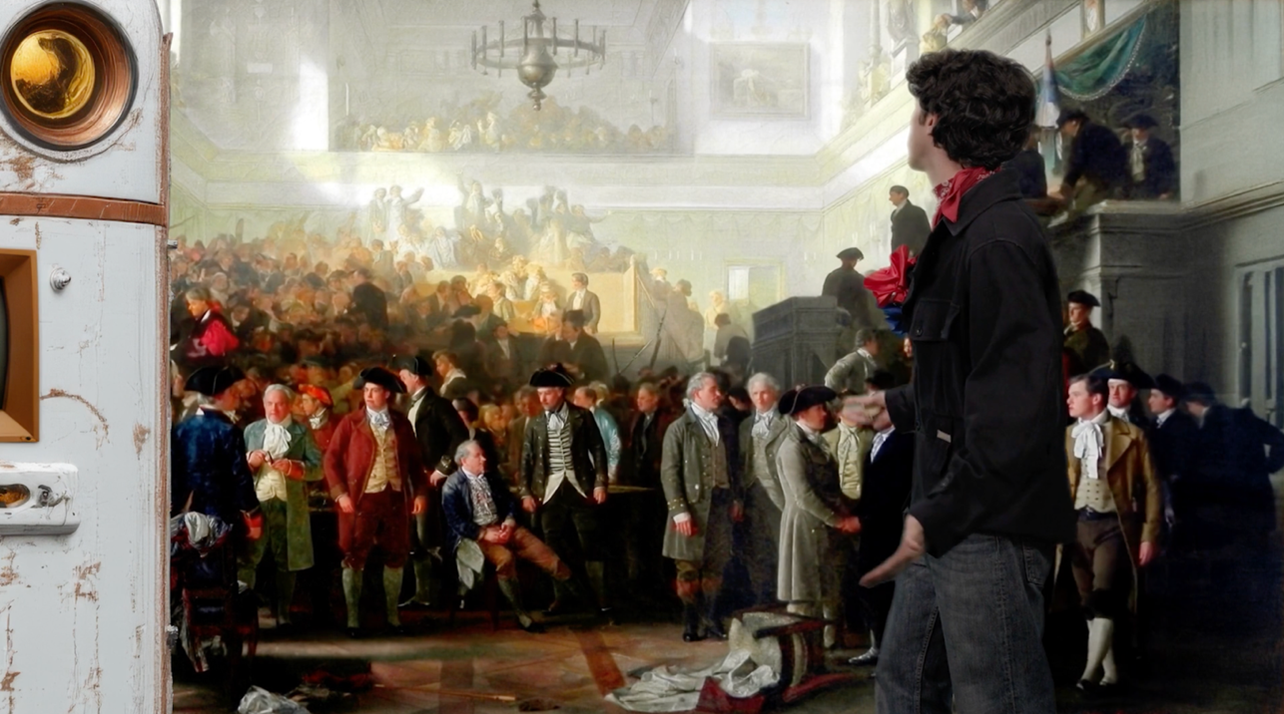
It is precisely in this balance that the virtuous use of technology becomes evident. Artificial intelligence is employed to animate the artworks and generate immersive environments, while leaving full space to human creativity in scriptwriting, acting, and visual direction.
The dialogues are carefully crafted, combining historical facts with clarity of exposition; the acting gives personality and nuance to the characters; the directorial choices guide the viewer’s gaze between the bedroom and the animated scenes, creating narrative continuity.
From both a visual and educational perspective, the project demonstrates how AI can be a powerful tool for innovating the teaching of history, transforming content often perceived as distant into immersive experiences.
This Sanoma project enhances the potential of artificial intelligence, using it as a lever to amplify storytelling and make learning more engaging, without ever overshadowing the central role of editorial creativity, writing, and human interpretation.