By Philippe Landroux, Publisher at VAN IN
Sciences: discovering in order to choose, understanding in order to act
In a world undergoing profound environmental, energy and technological change, science teaching can no longer be limited to the acquisition of content. It must enable pupils to understand the issues around them and to take a position on them.
The textbook Impact Sciences is part of this evolution, offering an ambitious approach: making science a lens through which to read the world. From the first year of lower secondary school, it invites pupils to move beyond passive learning and enter an active process in which understanding leads to decision-making.
From content to meaning: an architecture that changes the game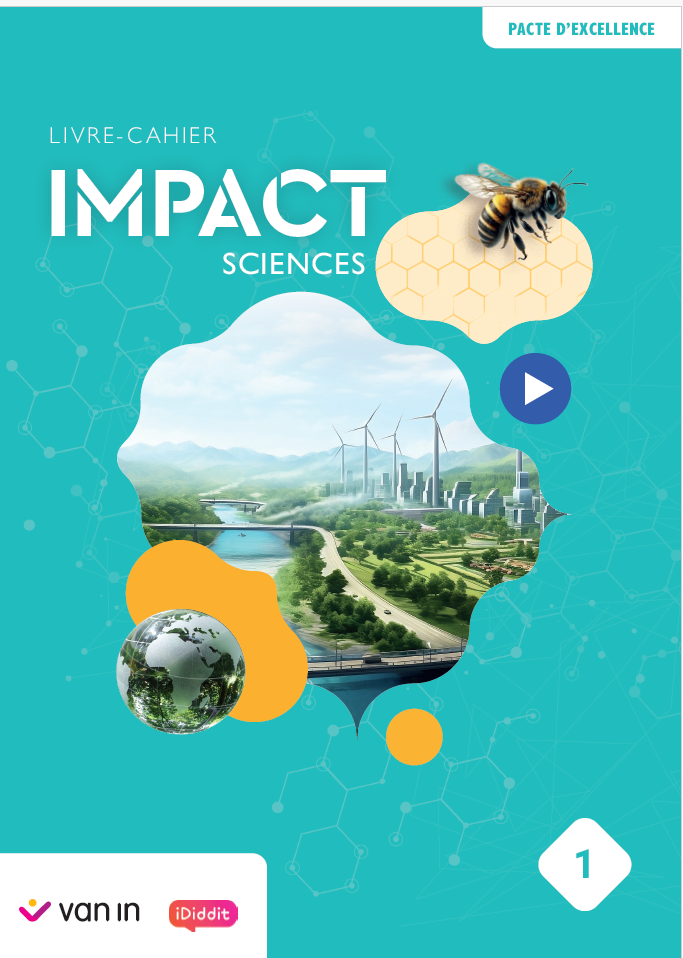
One of the strengths of Impact Sciences lies in its structure around six themes covering the major scientific fields. Each learning pathway concludes with an engaging final activity — a challenge, game or mission — centred on a concrete issue.
This organisation gives real coherence to learning. Concepts are never compartmentalised: they form part of a progression that leads to a complex task. Pupils gradually understand that scientific knowledge is not an end in itself, but a set of tools to be mobilised.
The pedagogical mechanics are clear and effective. The sections “Know”, “Apply and transfer” and “Experimentation” support a structured progression: observing, understanding, testing and then reusing. This progression fosters autonomy and embeds learning over time.
When science becomes a decision-making tool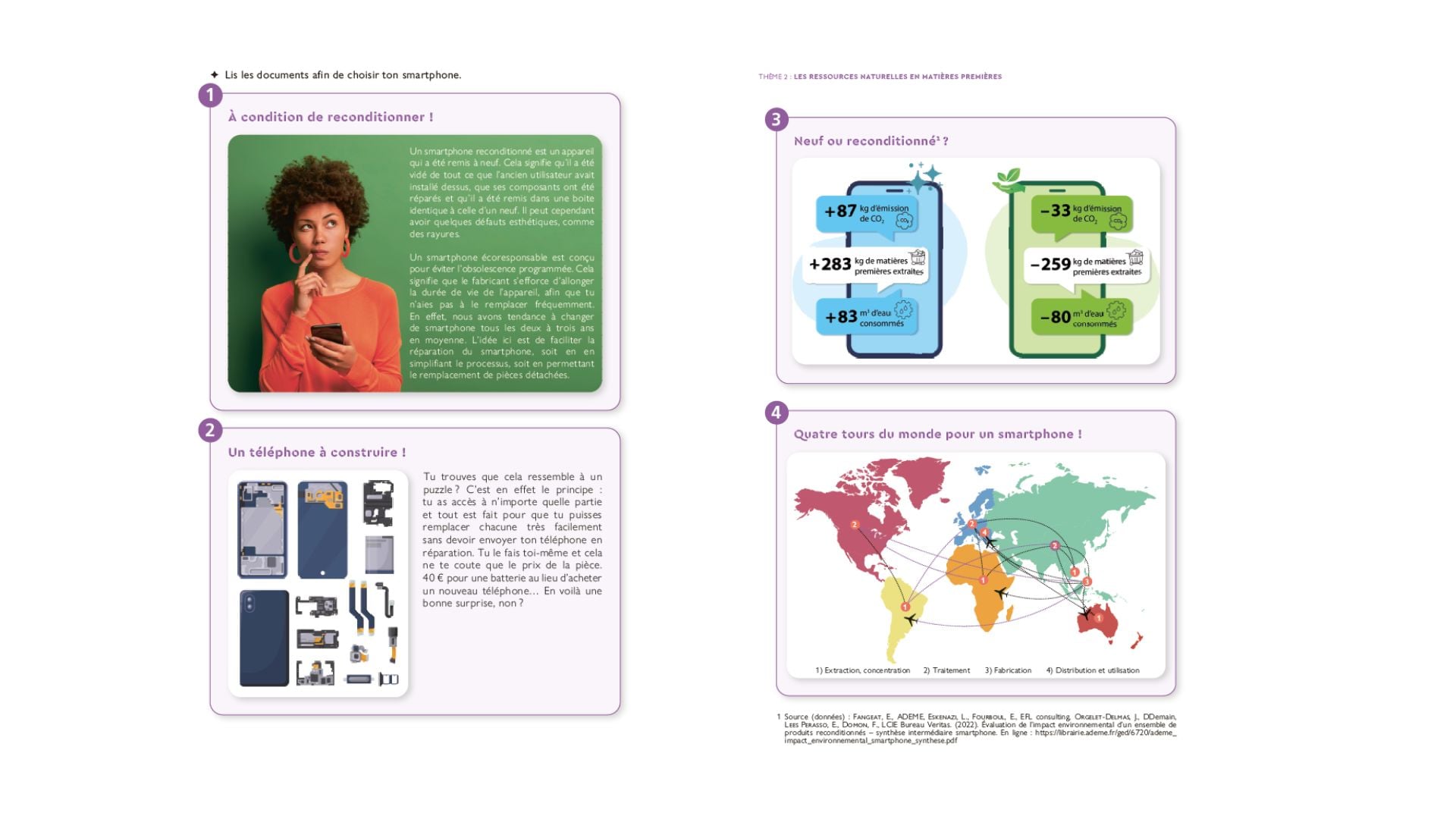
The textbook’s true originality lies in its final activities. They turn knowledge into levers for action. In the ecosystems theme, designing a permaculture vegetable garden requires pupils to connect physical constraints, plant needs and interactions between species. It is no longer about reproducing knowledge, but about making coherent decisions on the basis of it.
In the natural resources theme, choosing a smartphone or reflecting on recycling confronts pupils with issues directly linked to their everyday lives: consumption, environmental impact and the lifespan of objects.
Finally, the “city of tomorrow” simulation leads pupils to weigh up cost, ecological impact and continuity of energy supply. They have to compare, argue and justify — in other words, think like decision-makers.
In these activities, science does not impose a single answer: it illuminates choices.
Learning to think about the world in order to find one’s place in it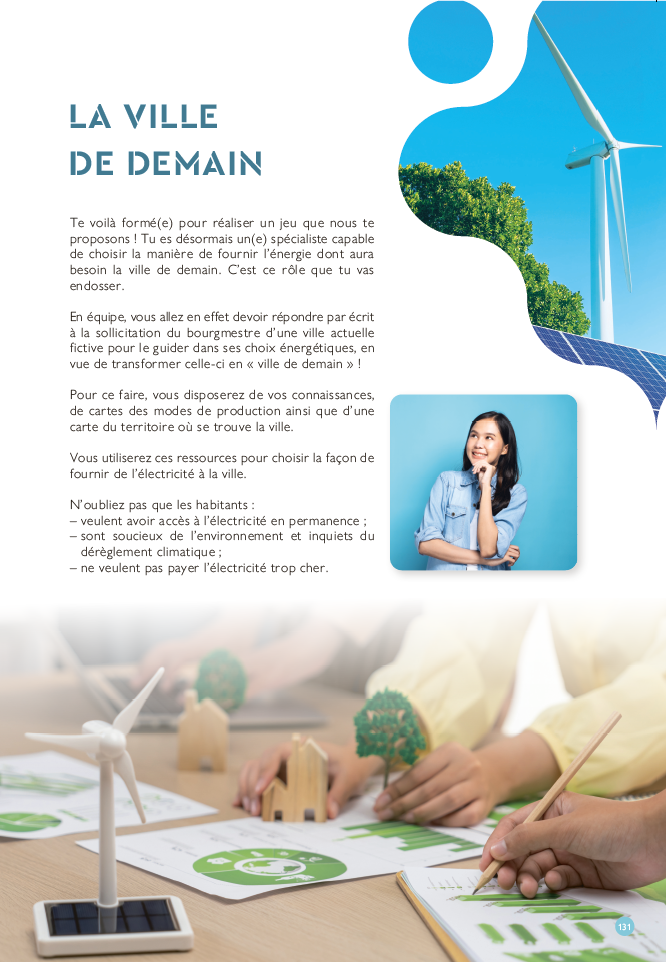
This positioning profoundly transforms the pupil’s role. It is no longer merely a matter of learning, but of understanding, analysing and taking a position.
Scientific concepts are systematically linked to concrete issues: biodiversity, resources, energy and health. This contextualisation makes it possible to develop essential skills:
- distinguishing between scientific facts, beliefs and opinions;
- analysing complex information;
- making connections between knowledge and reality.
Pupils are thus gradually prepared to face situations in which science lies at the heart of decisions. They learn to reason, but also to weigh up competing options.
An editorial response to today’s expectations
Impact Sciences illustrates a major shift in expectations of school textbooks. Science teaching today must fulfil a dual mission: transmitting robust knowledge and educating citizens capable of acting in an informed way.
The textbook’s strength is that it succeeds in bringing these aims together. It combines scientific rigour, pedagogical clarity and pupil engagement. It offers a structured approach while opening up spaces for reflection and debate.
With Impact Sciences, science becomes both a field for exploration and a tool for action. Knowledge takes on a concrete dimension: it enables pupils to analyse, understand and, above all, choose.
Educating pupils who are capable of making informed choices: this is where the project’s ambition lies. And it is no doubt also one of the most promising directions for scientific school publishing.