By Jan Jaap Bijlsma, Manager Customer Success for Primary Education at Malmberg
Starting in the 2025–2026 school year, schools will use the renewed edition of Klinkers in Grade 3. This edition aligns seamlessly with the initial reading method Lijn 3: children learn to read and write a letter on the same day.
Scientific research has shown that writing letters supports reading and spelling. The materials for Grades 1–2 and 4–8 will follow in the 2026–2027 school year. Together, they will form a complete, continuous learning path for handwriting from Grade 1 through Grade 8.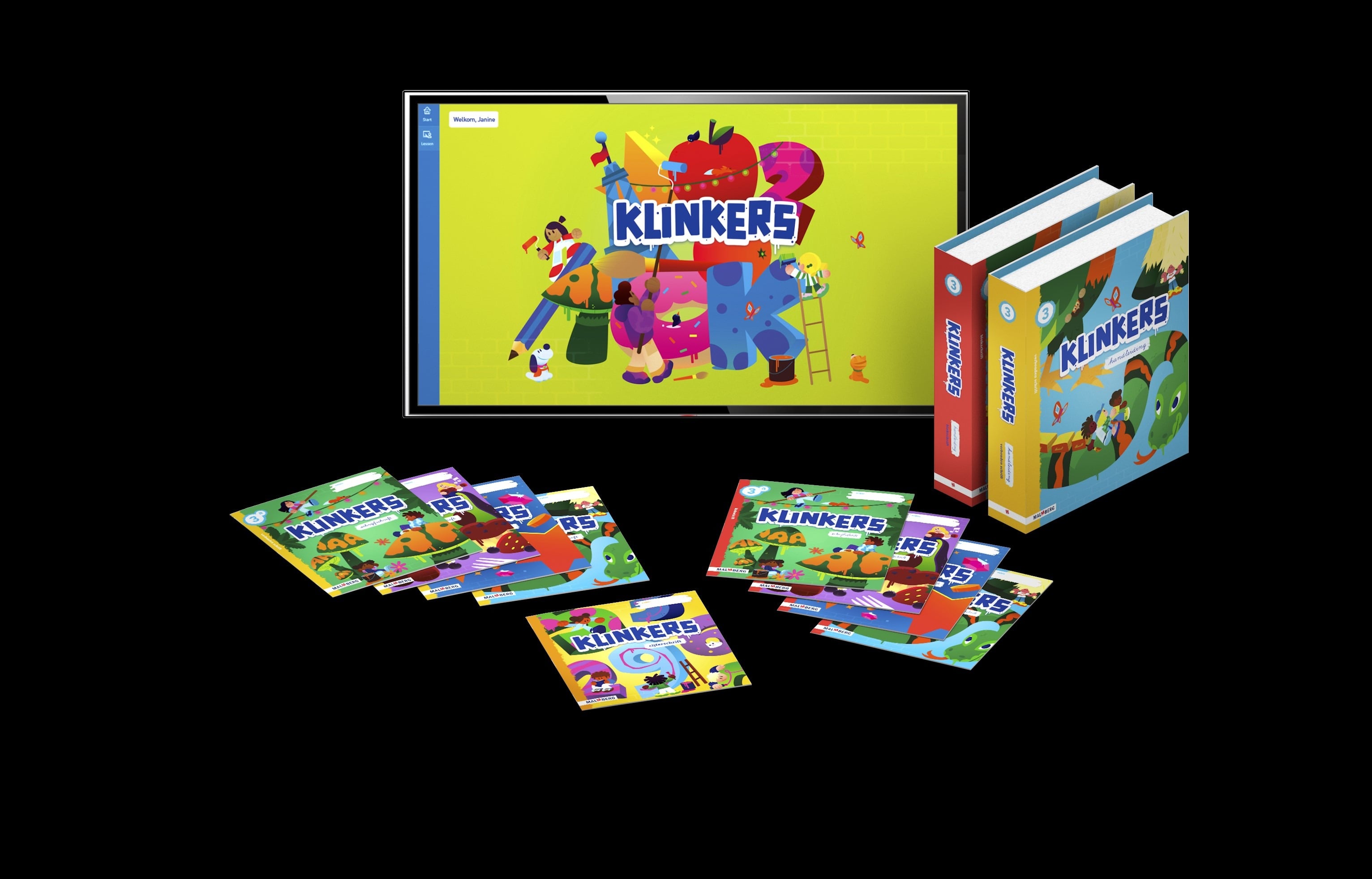
1. Learning to write easily through smart design choices
One of the most important strengths of Klinkers is the updated handwriting guidelines. These are the support lines children use to practise handwriting. The 1:1:1 ratio makes the zones of cursive handwriting clear and logical, enabling pupils to learn letter shapes more easily. Instruction becomes simpler and results more consistent.
The connection with Lijn 3 also plays an important role. Lijn 3 uses the same line format. Alignment in letter sequence, planning, and themes ensures that reading, writing, and spelling reinforce one another. This creates calm in the schedule and an efficient structure for both pupils and teachers.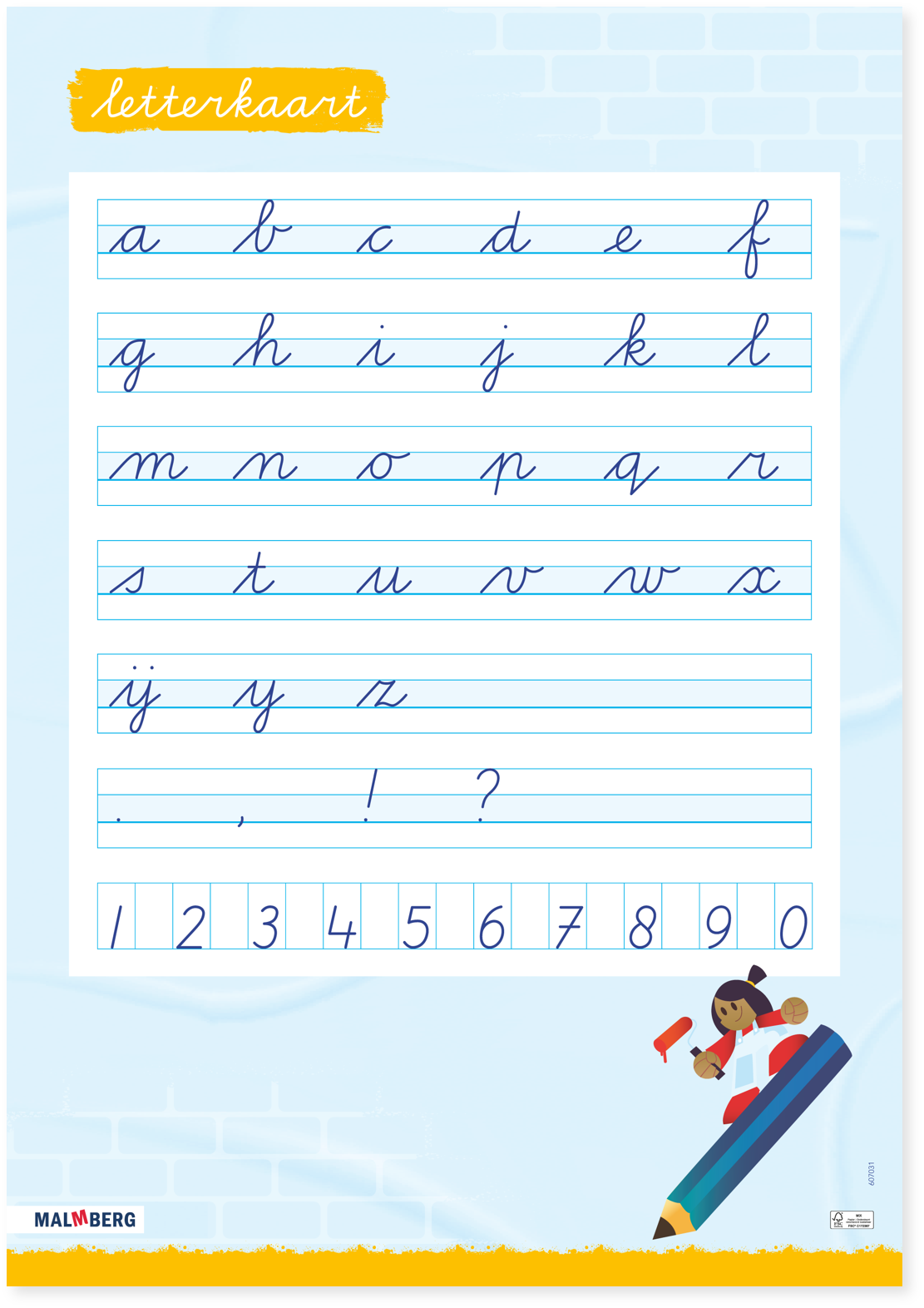
2. More relevant handwriting instruction for all grades
Klinkers focuses not only on the technical aspects of writing but also on making writing lessons meaningful. Starting in Grade 4, there are Transfer Lessons in which children evaluate their own handwriting in other subjects.
In higher grades, lessons such as Designing appropriately, functional writing, and speed-writing lessons are added. These help pupils discover how clarity, structure, and writing pace contribute to better communication and improved information retention. In the upper grades, the lessons prepare students more consciously for secondary education through activities such as summarising, note-taking, and cross-curricular writing tasks.

3. Strong support for teachers
Klinkers is known for its simplicity and ease of use. The teacher guides are visual, concrete, and well structured. Each letter includes clear visualizations of shape, stroke sequence, and placement on the line.
The method also provides:
- Interactive whiteboard software with warm-ups, worksheets, and video clips.
- Stroke-sequence videos and letter videos.
- Handwriting support tools for pupils who need extra help.
These materials reduce preparation time, provide clearer instruction, and increase control over the quality of handwriting education.
4. Making progress visible
Klinkers encourages children to think actively about their own writing. Reflection moments, smileys, writing criteria, and transfer lessons make it easy for pupils to work purposefully on improvement.
In this way, they develop ownership and confidence — important skills for future learning.
5. Materials that make a difference
The writing books, number-writing books, and lined notebooks connect logically and support the didactic progression of the method. “Rail letters” help pupils learn stroke sequences, and the classroom letter cards and wall charts provide visual support.
Lessons are attractively designed and align with familiar themes from Lijn 3.
Klinkers therefore offers a modern, well-designed, and future-oriented handwriting curriculum for primary education. A method that fits today’s classroom practice, strengthens handwriting as a subject, and helps pupils learn to write skillfully, neatly, and clearly.
Want to learn more or view the materials? Visit:
https://malmberg.nl/basisonderwijs/methodes/schrijven/klinkers