By Nanette van Mourik, Sustainability Manager
On 8 September, International Literacy Day puts a spotlight on one of the most fundamental skills in education: the ability to understand and make sense of the world through language. For Sanoma Learning, literacy is an important part of our wider mission to support high-quality and inclusive learning. It is our view that literacy goes beyond the ability to read and write: it helps young people understand information, express themselves and participate meaningfully in society. As the world around us becomes increasingly digital, these skills are more important than ever, with learners needing to navigate, assess and use information with confidence.
This makes literacy not only a subject to be taught, but also a foundation on which learning across the curriculum can be built. This approach can be seen in Santillana’s new educational project, Construyendo nuevos mundos (“Building new worlds”) introduced for the 2026 school year.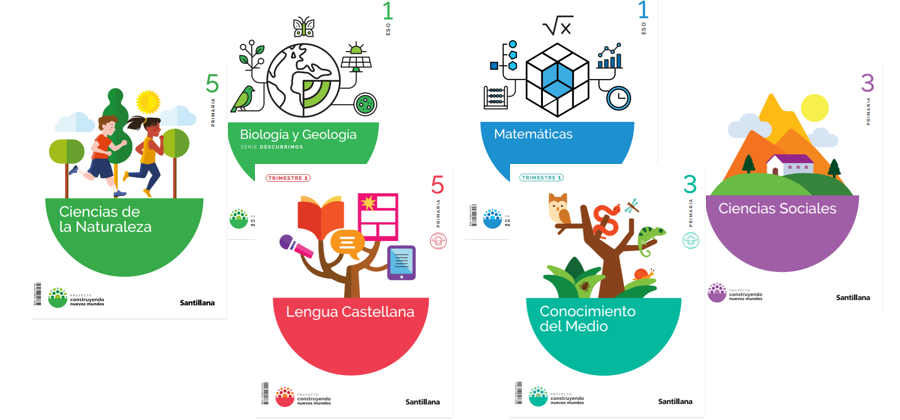
Santillana, part of Sanoma Learning, developed the project in response to the changing needs of today’s classrooms, following more than a year of dialogue with over 4,500 teachers through its #aprendemosjuntos initiative. The result is a broad learning project designed to connect classroom learning with students’ lives and with the world around them. It brings together learning materials and resources with a focus on meaningful learning, inclusion and the development of skills that students can apply beyond the classroom.
A central element of Construyendo nuevos mundos is its approach to reading comprehension. Rather than treating literacy as the responsibility of language lessons alone, the project makes comprehension a transversal part of learning across subjects. Students are encouraged to identify key ideas, understand different text structures, make connections and inferences, and reflect on their own understanding. In this way, reading becomes a tool for learning science, history, geography and other subjects, rather than an isolated skill.
Carolina Blazquez, Editorial Portfolio Manager Spanish Language at Santillana: “Reading comprehension has become one of the main challenges facing our teachers, and it extends far beyond the language classroom. For this reason, we have incorporated a dedicated interdisciplinary program into our project, designed to develop this essential skill progressively, systematically and comprehensively across the main curriculum areas.
Supported by a carefully sequenced instructional framework, the program identifies and addresses reading difficulties and provides strategies tailored to different types of texts—including news articles, stories, mathematical problems, charts, maps and poems—ensuring sustained, meaningful progress in students’ reading skills.”
Construyendo nuevos mundos also places attention on the diversity of learners and their different starting points. The project includes differentiated activities and accessibility features, while some of its primary materials offer different levels for early reading and writing development. The aim is to support students with different learning needs and help teachers create learning experiences that are accessible to a wider range of learners.
Another defining feature is the project’s connection to real-life situations and wider social challenges. Learning activities can lead to final products linked to the Sustainable Development Goals, giving students opportunities to apply knowledge while thinking about issues that extend beyond the classroom. In this way, the project connects what students learn with questions about the communities and world they are part of.
Language and cultural context are also essential. Construyendo nuevos mundos is being developed for Spain’s diverse educational and cultural landscape, with materials specifically created for the autonomous communities where co-official languages are spoken, including Castilian, Galician, Basque, Catalan and Valencian editions. This reflects Spain’s rich linguistic and cultural diversity, while recognizing the important role language plays in making learning accessible and relevant to students across the country.
Blazquez: "Santillana’s approach to literacy is reflected in Construyendo nuevos mundos and is consistent with the UNESCO and OECD emphasis on developing informed, critical and socially engaged learners. Literacy is sometimes associated mainly with the mechanics of reading and writing. In education, however, its role is much broader: it can provide students with the means to understand information, engage with different perspectives, communicate their ideas and participate in society. The name Construyendo nuevos mundos captures this ambition: before students can imagine and build new worlds, they need to understand the one they live in.”